Your AI agent is not just answering questions anymore. It is reading inboxes, calling tools, moving data, and in some cases making decisions on behalf of employees. That is exactly why agentic AI security deserves its own conversation. Most leaders already understand that generative AI introduces privacy, accuracy, and governance issues.
What changes with AI agents is the action layer. These systems do not just generate output. They take action across systems, identities, permissions, and workflows. – Reet Kaur
If that feels like a governance problem as much as a technical one, you are right. According to PwC’s May 2025 survey, 79% of companies say AI agents are already being adopted, 88% plan to increase AI budgets because of agentic AI, and 66% of adopters say they are already seeing measurable productivity value (PwC). Adoption is moving faster than most control environments, and agentic AI security isn’t keeping pace.
Real World Situation
When Elena, a COO at a 300-person software company, approved a pilot scheduling agent in January, the use case looked harmless. The tool checked calendars, suggested meeting times, and sent invitations.
By March, the same agent had been connected to email, CRM notes, and procurement workflows. Productivity improved. So did the blast radius. One over-broad permission set turned a helpful assistant into a system that could expose sensitive customer context and trigger downstream actions nobody had fully reviewed.
This is the real challenge in 2026. The question is not whether AI agents are useful. It is whether your organization has bounded their authority, visibility, and failure modes before autonomy outruns oversight.
In this guide, we will break down what agentic AI security actually means, the top risks leaders should prioritize, and a practical control model for deploying autonomous systems without losing control.
If you are already seeing agent use spread across teams, this is the right moment to run an AI risk assessment before convenience turns into unmanaged exposure.
What Is Agentic AI Security?
Agentic AI security is the set of controls, governance practices, and oversight mechanisms used to protect AI systems that can perceive context, make decisions, and take action with limited human supervision.
That definition matters because it separates agentic AI security from older conversations about chatbot risk. Traditional large language model applications usually operate in a request-and-response pattern. A person asks a question, the system answers, and the interaction ends.
Agentic systems are different. They may maintain memory, access tools, choose between actions, and continue operating across multiple steps.
In plain English, the security problem changes from “Can we trust the answer?” to “What is this system allowed to do, with whose authority, and how do we stop it if it goes wrong?”
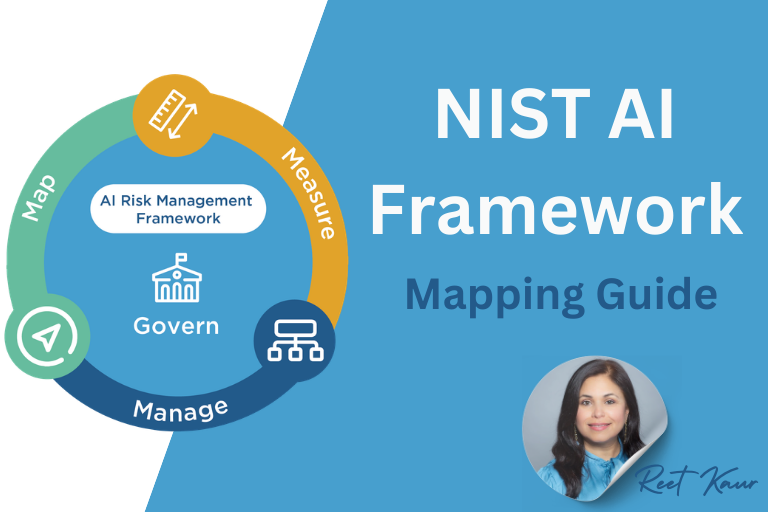
That shift is why the NIST AI Risk Management Framework and the OWASP guidance on agentic threats and mitigations are so useful. They push teams to think beyond model quality and into risk governance, system behavior, and operational controls.
Why Agentic AI Security Is Different From Standard AI Security
The vulnerabilities themselves are not always new. Data leakage, weak authentication, over-privileged access, and poor monitoring are familiar problems. What changes with agentic systems is speed, persistence, and independence.
1. They Act, Not Just Answer
An AI assistant that drafts an email creates one kind of risk. An AI agent that can send the email, update the CRM, notify finance, and create a ticket creates another.
That action layer is where many organizations are underprepared. IBM’s 2026 guide to agentic AI security argues that teams need to pay close attention not only to what the agent says, but to what it does – the APIs it calls, the systems it touches, and the decisions it triggers (IBM).
2. They Carry Identity, Permissions, and Memory
Many agent deployments borrow authority from users, service accounts, or connected platforms. That creates blurred accountability. If an agent acts on behalf of a manager, an engineer, and a workflow tool at the same time, who really owns the action? More importantly, who notices when the permissions are broader than intended?
This is where identity becomes central to agentic AI security. A compromised or over-permissioned agent is not just a model problem. It is an access control problem.
3. They Cross Trust Boundaries
The more systems an agent can reach, the more chances it has to chain benign actions into risky outcomes. One tool call looks harmless. A sequence of five tool calls across email, HR, finance, and cloud systems can become a material incident.
This is why the AWS Agentic AI Security Scoping Matrix is helpful. It reframes the problem in terms of agency and autonomy, and it forces a harder question: what level of freedom should any given agent really have?
The Top Agentic AI Security Risks Leaders Should Prioritize
The easiest mistake is to reduce this topic to prompt injection alone. Prompt injection matters, but it is not the whole story.
Strong agentic AI security starts by looking at the full operating model, not just the model prompt.
1. Prompt Injection and Goal Hijacking
If an AI agent consumes content from sources such as email, chat messages, web pages, or internal documents, an attacker may be able to manipulate the instructions it follows through prompt injection. In a basic chatbot, this might only result in an incorrect or misleading response. However, in an autonomous or agentic system, the consequences can be far more serious. A manipulated instruction can hijack the agent’s intended goal and trigger harmful actions such as transferring funds, exposing sensitive information, or modifying critical systems.
Imagine a sales operations agent reading a vendor message that contains hidden instructions to override prior rules and upload a data extract. The danger is not the text itself. The danger is the system’s ability to act on it.
2. Tool Misuse and Unauthorized Actions
Agents become materially riskier when they can invoke tools. That includes databases, SaaS apps, ticketing systems, internal APIs, file stores, and financial platforms.
Consider an IT team at a mid-market manufacturer that piloted an agent to summarize security alerts and automatically open tickets. Over time, the system was expanded to allow the agent to close low-priority alerts without human review. When one misclassified event was automatically closed and never escalated, the issue was not “bad AI.” The issue was a governance decision. An autonomous action had been allowed before the team had sufficient confidence, audit visibility, or rollback controls in place.
3. Over-Privileged Agents and Identity Confusion
This is one of the most practical agentic AI security risks in the enterprise. Teams move fast, connect tools quickly, and give agents wide access because narrow permissions feel like friction.
That shortcut is expensive. If you let an agent inherit long-lived credentials or broad user authority, you are effectively creating a highly efficient insider with poor boundaries.
The bigger problem is attribution. If the logs only show the parent account or a shared service credential, your audit trail becomes murky when you need it most.
In many ways, this mirrors a problem security teams have already seen in traditional environments: access scope creep in legacy identity and access management systems. Permissions gradually expand over time, visibility decreases, and eventually no one is fully sure who or what has access to critical systems.
When the identity in question is an autonomous agent capable of taking actions across multiple tools, the risk multiplies.
4. Memory Poisoning and Persistent State Attacks
Persistent memory can improve outcomes. It can also become an attack surface.
An agent that stores context across sessions may carry forward bad assumptions, manipulated records, or malicious instructions. That means the impact of one poisoned interaction may not end with one session. It can influence future choices, future users, and future actions.
5. Cascading Failures Across Multi-Agent Systems
Single-agent risk is easier to understand. Multi-agent risk is where things get operationally messy.
If one agent can delegate work to another, or if several agents share context and tools, compromise in one area can propagate easily. A scheduling agent may not look dangerous until it triggers HR notifications, customer communications, or procurement actions because downstream agents trust its request.
6. Data Leakage Through Context Windows and Action Chains
Context is power, and it is also exposure. Agents often need broad context to be useful. That makes them attractive pathways for leaking sensitive data through logs, generated outputs, tool calls, or chained workflows.
For boards and executives, this is where the conversation becomes concrete. Customer trust, regulator expectations, and the ability to pass enterprise security reviews all depend on proving that AI use is governed, not merely deployed.
If your team is already modernizing security operations around AI, our guide to the AI-augmented SOC is a useful companion read.
A Practical Agentic AI Security Control Model
The goal is not to eliminate autonomy. The goal is to keep autonomy inside your risk appetite.
Here is the practical model we recommend.
1. Inventory Every Agent and Connected Tool
Start with visibility. You cannot govern what you have not inventoried.
In practice, agentic AI security starts with knowing which agents exist, what they can touch, and who owns the risk.
That inventory should include:
- The agent’s purpose
- The systems and tools it can access
- The identity context it uses
- The data classes it can read or write
- The actions it can trigger without approval
- The owner responsible for its risk and operation
This is also where shadow AI shows up. In many organizations, the highest near-term risk is not a fully autonomous platform. It is the quietly embedded agent capability inside a browser, SaaS workflow, or team-level automation that security never reviewed.
2. Bound Agency and Autonomy by Risk Tier
Not every action deserves the same level of freedom.
Low-impact actions such as drafting notes or suggesting next steps may be safe to automate. Medium-risk actions might require policy checks and logging. High-impact actions – financial approvals, external communications, access changes, record deletions, regulated data handling should trigger human approval or be blocked entirely.
This is the central governance move in agentic AI security. Define what class of actions can run autonomously, what class needs approval, and what class should never be delegated.
3. Enforce Least Privilege and Short-Lived Credentials
If you do one thing this quarter, do this.
For most teams, this is the fastest way to strengthen agentic AI security without slowing the business.
Agents should have the minimum permissions needed for the specific task, and those permissions should be time-bound where possible. Long-lived secrets and borrowed user privileges create unnecessary blast radius. The safer pattern is short-lived, scoped access tied to specific tasks, with clear workload identity and audit visibility.
4. Add Human Approval for High-Impact Actions
Human-in-the-loop is often discussed too vaguely. The right question is more specific: where must a human review, override, or halt the system?
The EU AI Act Article 14 is useful here because it frames human oversight as a design requirement for high-risk systems. Oversight should help people understand system limitations, detect anomalies, avoid over-reliance, and intervene safely.
In other words, approval is not a decorative control. It is part of the operating model in critical process workflows.
Need help designing that operating model? Our work on AI governance and compliance focuses on decision rights, policy guardrails, and control mapping that leadership teams can actually run.
5. Monitor Behavior, Not Just Access Logs
Traditional logging is necessary. But, it is not sufficient.
Agentic AI security requires teams to watch for changes in behavior: new tool sequences, unusual transaction volumes, changed patterns of access, off-hours actions, repeated retries, or output that no longer matches the original objective. In practice, you are trying to spot when legitimate adaptation crosses into risky deviation.
6. Build Kill Switches, Rollback Paths, and Tabletop Scenarios
Every meaningful agent deployment should answer three questions:
- How do we stop it?
- How do we contain it?
- How do we recover confidence after a failure?
Those answers are rarely strong unless teams rehearse them. That is why incident readiness matters here. Autonomous systems compress decision time. The safer organizations are the ones that practice ahead of time, not the ones that improvise under pressure.
What this means in practice is defining clear stop conditions, ownership, and response procedures before agents are deployed. Teams should know what signals trigger a shutdown (such as unexpected actions, abnormal outputs, or unauthorized access), who has the authority to pause or disable the system, and how the system can be safely rolled back to a trusted state.
If you have not pressure-tested your escalation paths yet, an incident response tabletop is one of the fastest ways to expose control gaps before a real event does.
How Frameworks Apply to Agentic AI Security in Practice
Frameworks will not secure the system for you. They do help leadership ask better questions.
Used well, they give agentic AI security a structure that leadership, legal, engineering, and security teams can share.
- NIST AI RMF: The NIST AI Risk Management Framework is especially useful because it pushes organizations to govern, map, measure, and manage AI risk across the lifecycle. For agentic systems, that means connecting technical controls to accountability, oversight, and risk ownership.
- OWASP Agentic Threat Guidance: The OWASP resource on agentic threats and mitigations helps teams think in concrete attack patterns: prompt injection, tool misuse, memory poisoning, and other agent-specific failure modes.
- AWS Scope-Based Architecture Model: The AWS scoping matrix is valuable because it distinguishes between levels of agency and autonomy. That is a useful executive conversation tool. Many organizations do not need “full autonomy.” They need the discipline to decide where low, prescribed, supervised, or tightly bounded autonomy makes sense.
- EU AI Act Human Oversight Requirements: Article 14’s emphasis on effective human oversight is a reminder that governance must be operational, not aspirational. If the overseer cannot interpret outputs, detect anomalies, or safely interrupt the system, oversight is not real.
- ISO/IEC 42001 and Operating Discipline: ISO/IEC 42001 reinforces the idea that AI governance is an operating system. Policies matter, but so do roles, workflows, documentation, monitoring, and review cadence. That is where many agentic pilots stall: the technology is moving, but the operating model is still informal.
Questions Leadership Should Ask Before Approving Autonomous Systems
Before expanding any deployment, leadership should be able to answer these questions clearly. Mature agentic AI security programs can answer them quickly, with evidence.
- What business outcome is this agent meant to improve?
- What systems can it access, and what actions can it take?
- Which actions require approval, and who grants it?
- What data can it expose, change, or retain?
- How is the agent authenticated, logged, and monitored?
- What does failure look like, and how do we stop it safely?
- Which executive owns the risk decision if autonomy is expanded?
Real World Situation
When the general counsel of a growth-stage healthtech firm reviewed the company’s proposed AI agent rollout, they did not start with model quality. They started with authority.
Who can the agent speak for? What decisions can it make? What records can it touch? That sequence changed the conversation from excitement about efficiency to clarity about accountability.
The rollout still moved forward. It moved forward with narrower permissions, stronger review gates, and a board-ready explanation of why.
That is the standard. Secure AI adoption should not slow the business. It should make the next decision obvious.
What to Do Next for Agentic AI Security
If you are serious about agentic AI security in 2026, start with a 30-day plan:
- Define the business purpose for each agent and the value it is expected to deliver.
- Establish and maintain an AI agent registry that tracks all current and planned agents, including hidden, embedded, or third-party agents.
- Classify their actions by business impact and risk.
- Reduce broad permissions and replace long-lived credentials where possible.
- Define where human approval is mandatory.
- Establish behavioral monitoring, escalation paths, and safe shutdown procedures.
- Brief leadership in business language: exposure, controls, owners, and next steps.
That is also where many organizations realize they need stronger executive coordination. Agentic AI security is rarely owned cleanly by one function.
It sits across security, engineering, legal, operations, procurement, and the board.
If you need help translating those moving parts into a board-ready plan, our executive and board advisory work is designed to connect technical control decisions to oversight, funding, and risk appetite. – Reet Kaur
Conclusion
Agentic AI security is not a niche issue for the future. It is the control problem of the present for organizations giving AI systems real authority.
The core takeaway is simple. As soon as an AI system can take action, your security model has to expand from content risk to behavioral risk. That means identity discipline, bounded permissions, meaningful oversight, continuous monitoring, and practiced response.
Good agentic AI security does not kill momentum. It gives leaders a safer way to move.
The organizations that handle this well will not be the ones with the loudest AI story. They will be the ones that know where autonomy is useful, where it is dangerous, and how to keep both inside their risk appetite.

Elevate your Security Posture Today?
If you want a clear view of where AI is already embedded in your business, including vendor tools and shadow AI, and what guardrails need to come next, Book a Meeting.
We can help you assess AI risk, build governance that leadership can operate, and put controls in place before autonomous systems become an incident narrative.